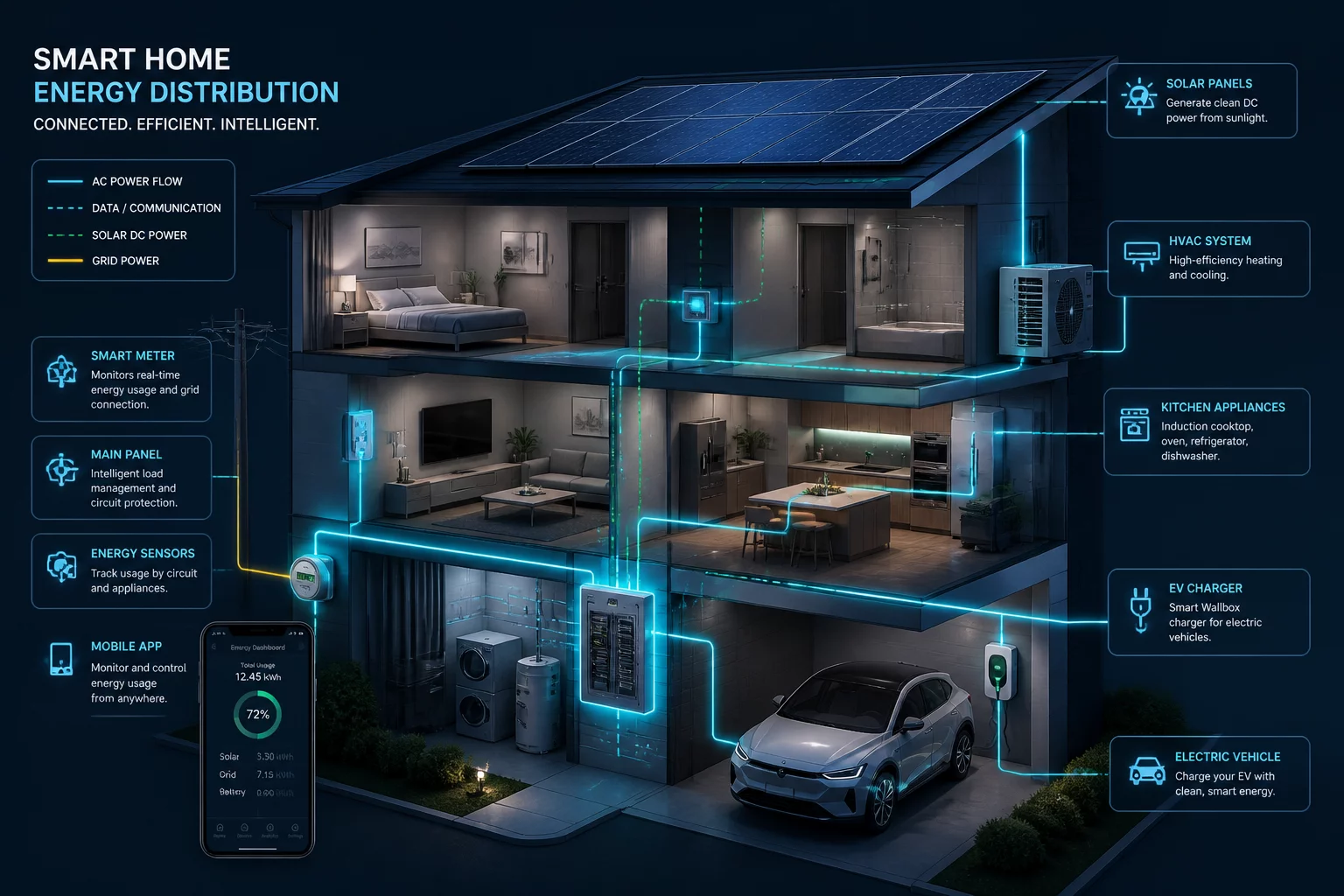
End-to-end electrical solutions: Wallbox hardware procurement, dedicated circuit run, panel capacity audit, and full permit compliance.
From comprehensive initial inspection to professional handover, our certified technicians ensure a secure and compliant EV charging setup at your property.
Comprehensive physical inspection of your home electrical service panel, load capacity, grounding system, and cable pathway routing.
Panel analysis & routing planDetermining the optimal charging station tailored precisely to your vehicle specifications, onboard converter, and daily driving habits.
Smart Wallbox matchingInstalling a heavy-duty dedicated circuit breaker, safe protective conduits, dynamic load balance module, and clean wall mount unit.
Dedicated line & hardwareRigorous circuit testing, phase balance check, mobile app connectivity setup, and clear operational walkthrough for the homeowner.
Full safety sign-offOur licensed electricians analyze your home electrical panel capacity, grid supply limits, daily duty cycle, and the vehicle onboard charger rating to specify and supply the ideal Level 2 hardware configuration.

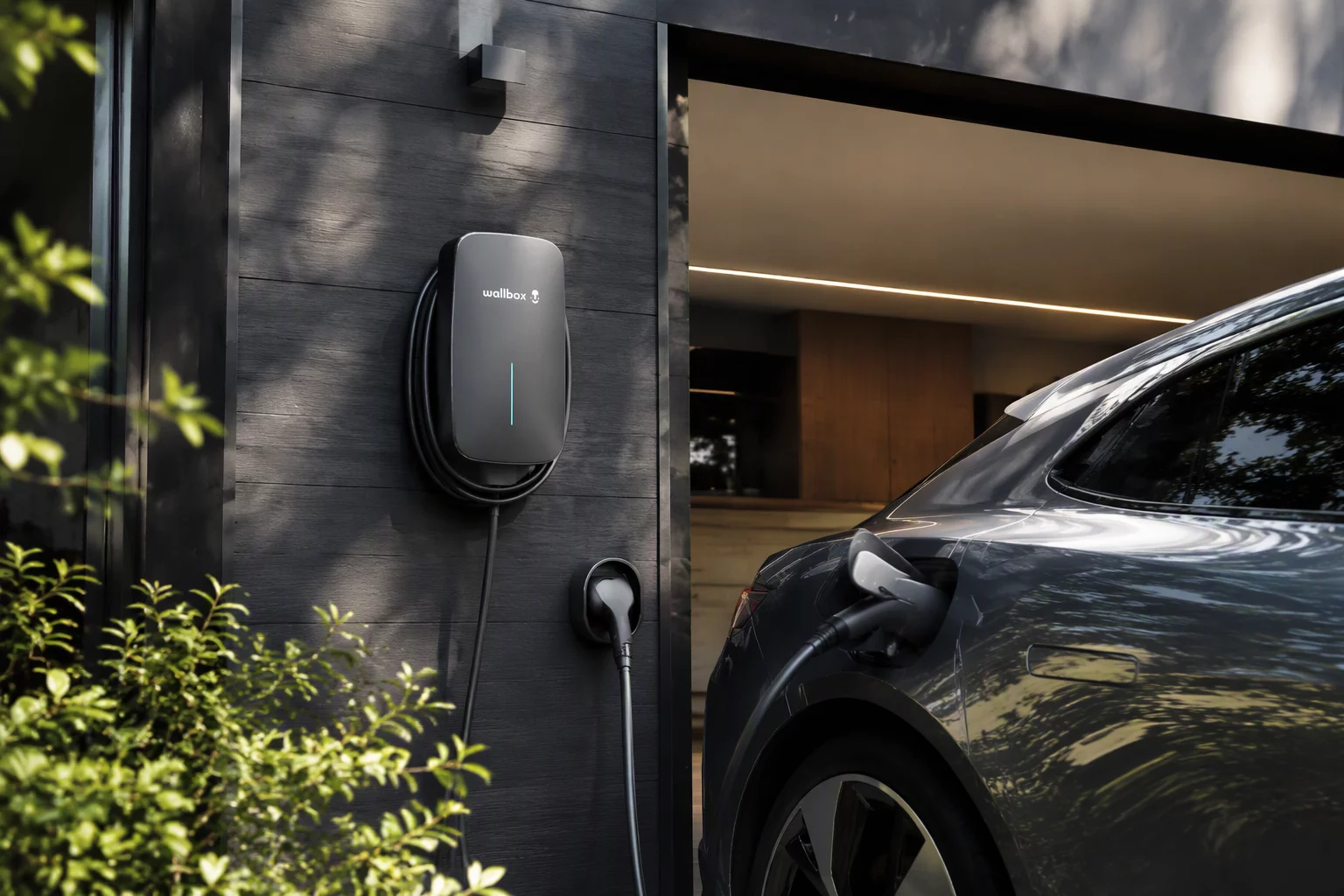
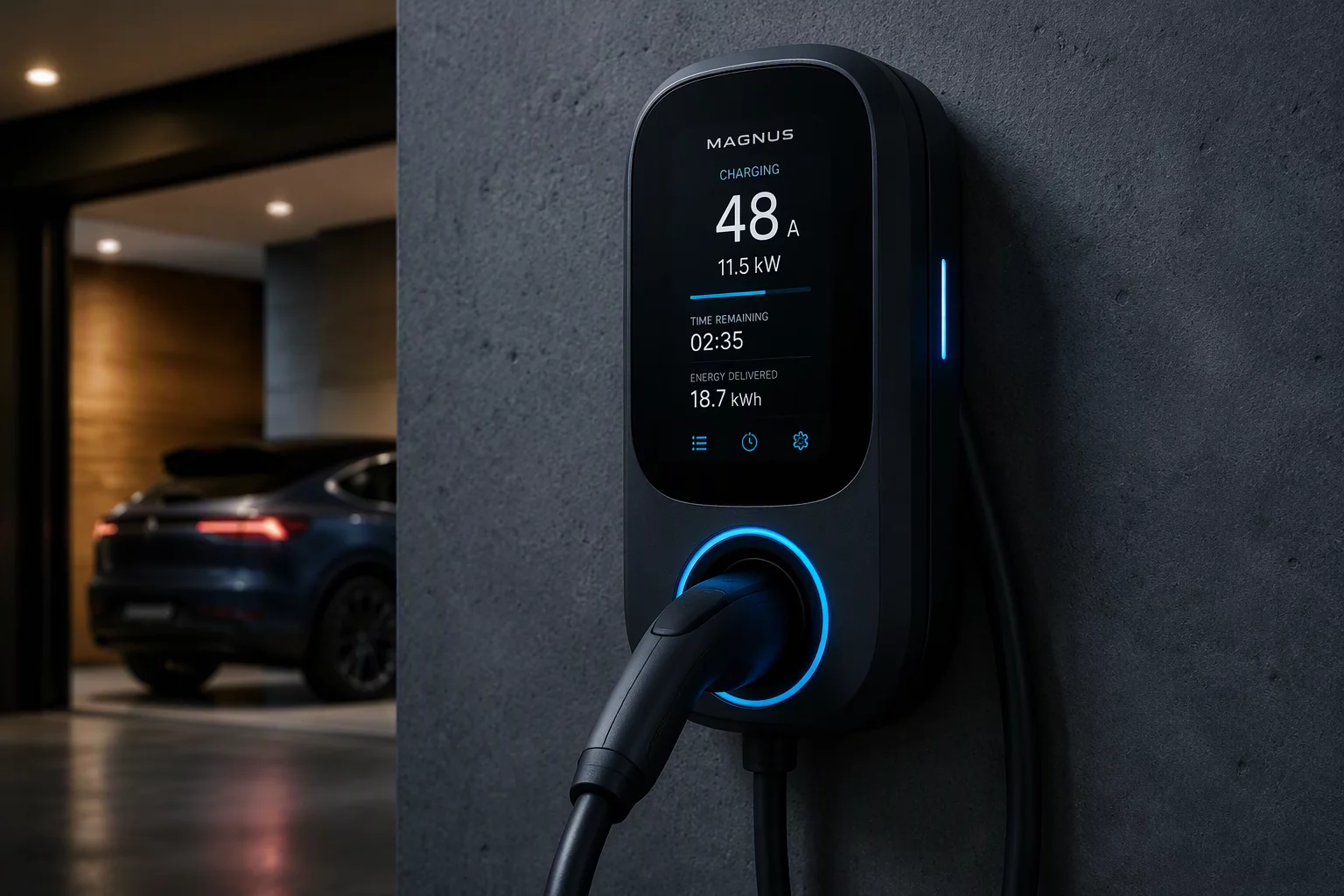
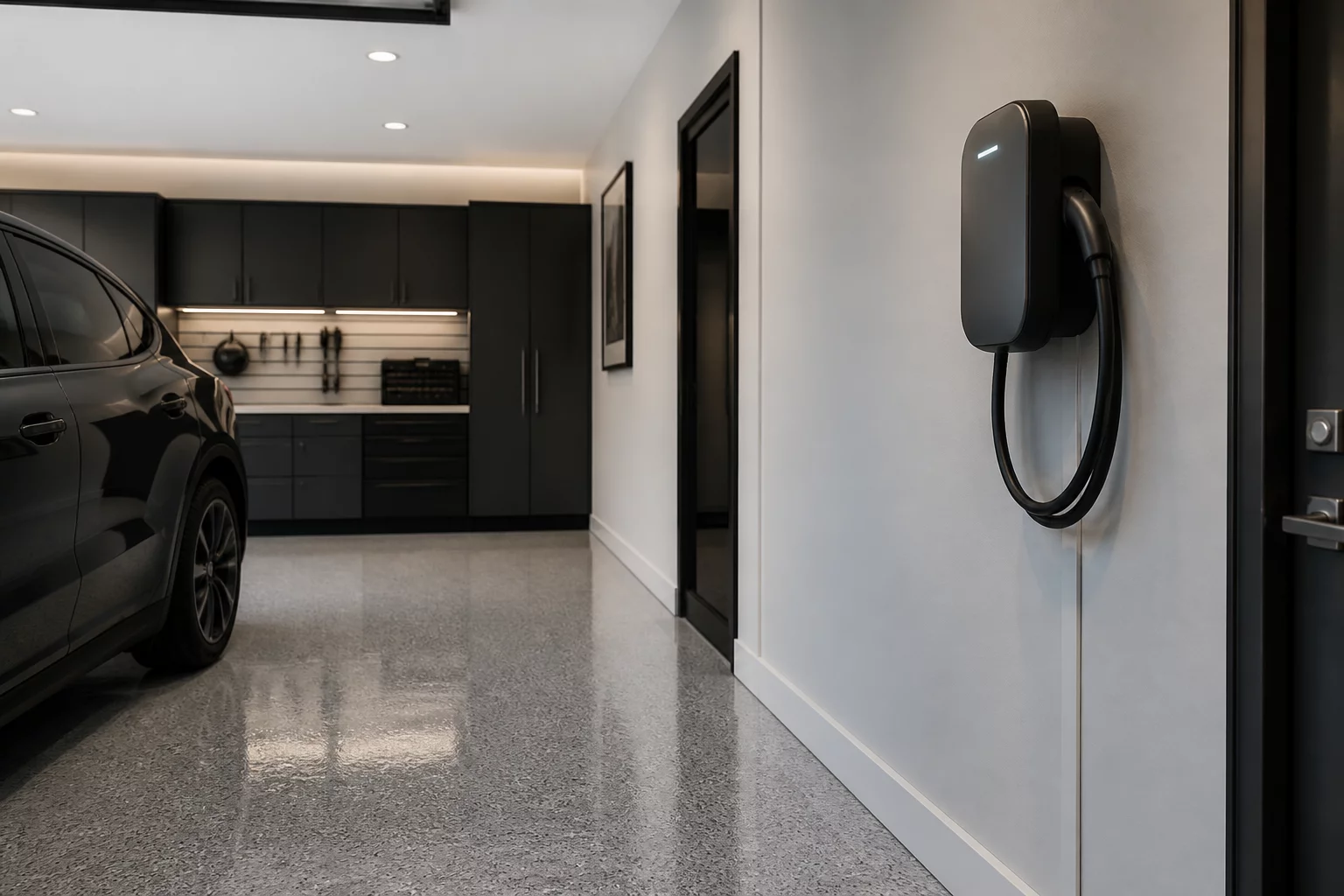
Engineered for sleek indoor garages and private driveways. Features a high-contrast status display, automated Wi-Fi telemetry, and native scheduling to optimize off-peak utility tariffs.

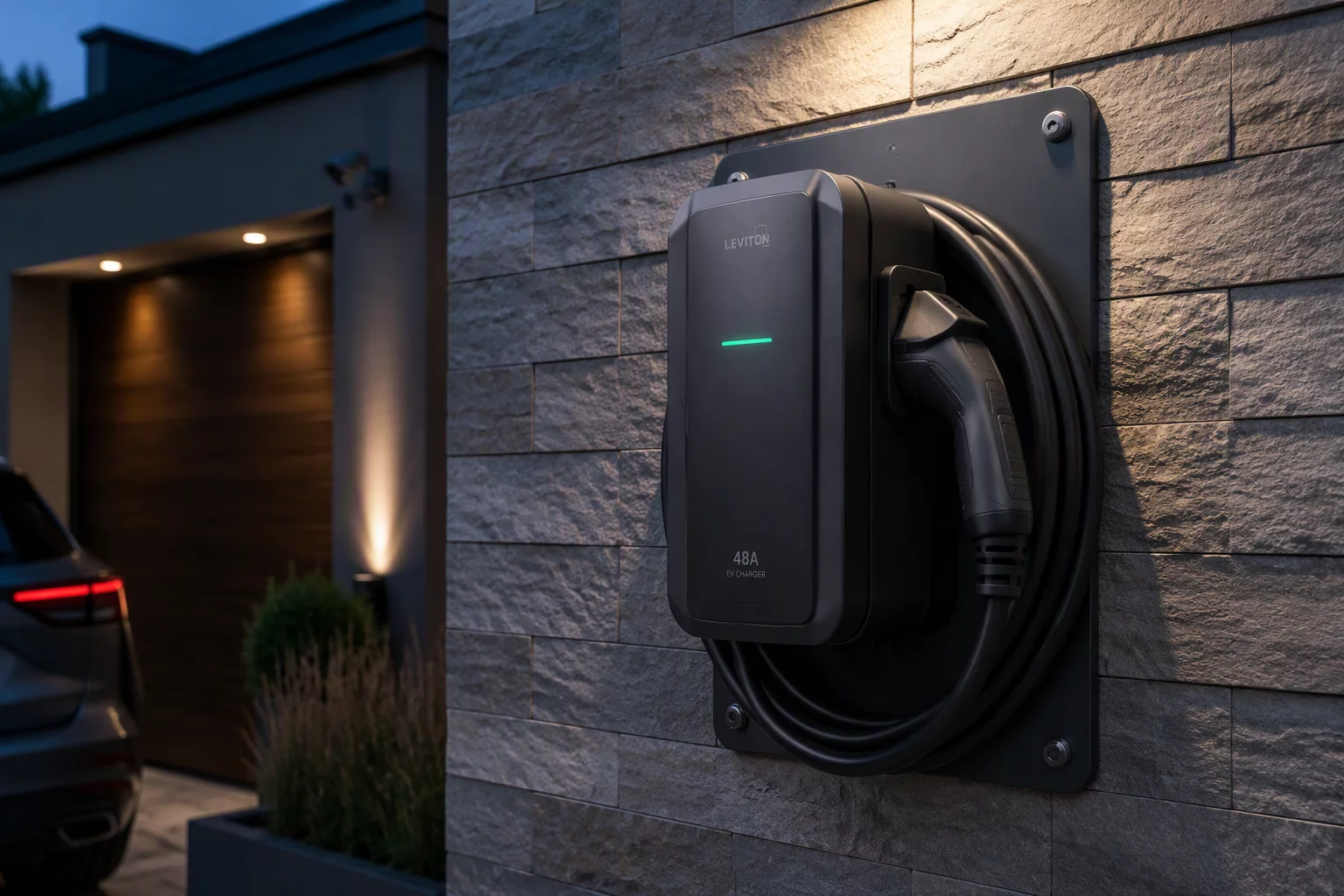
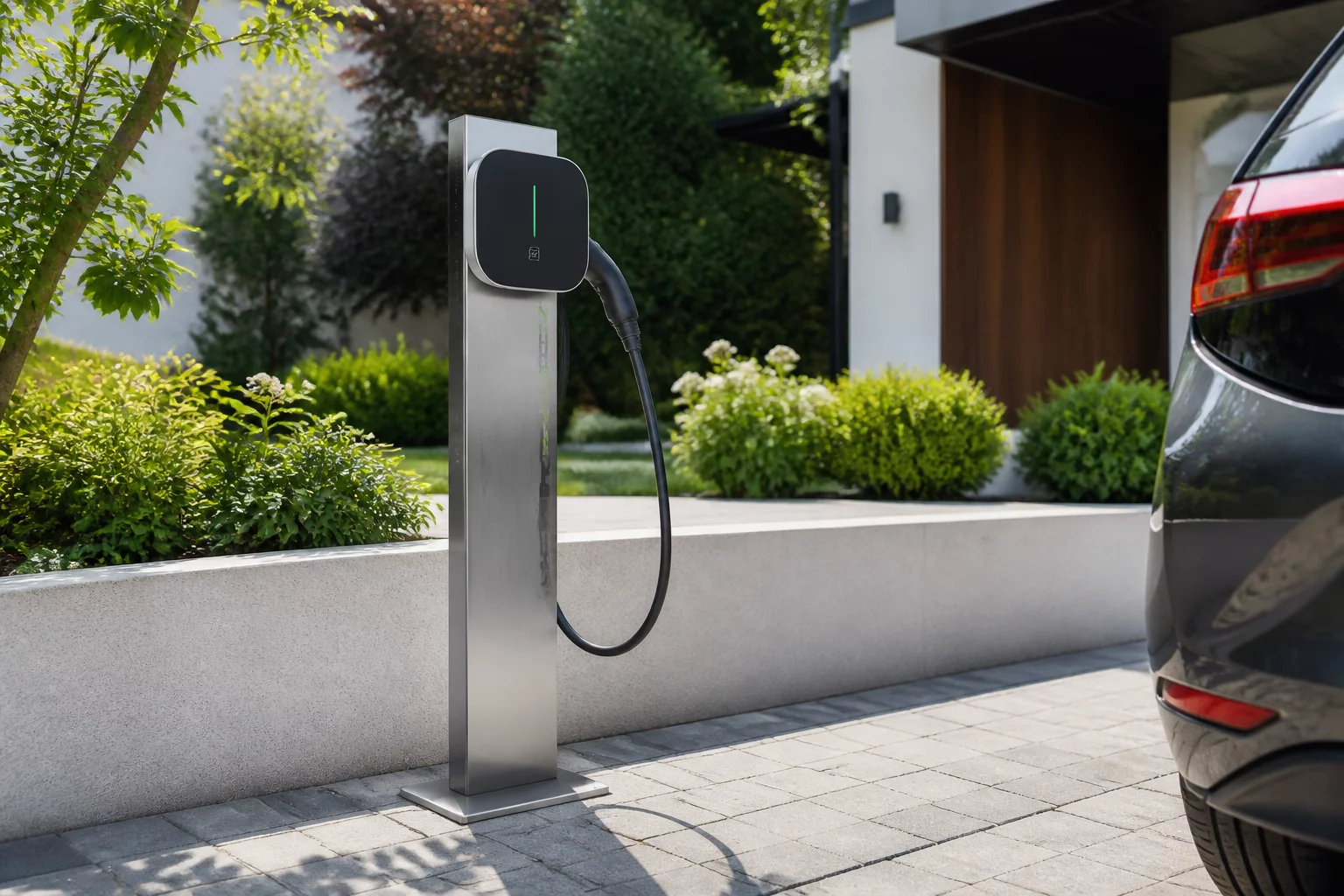
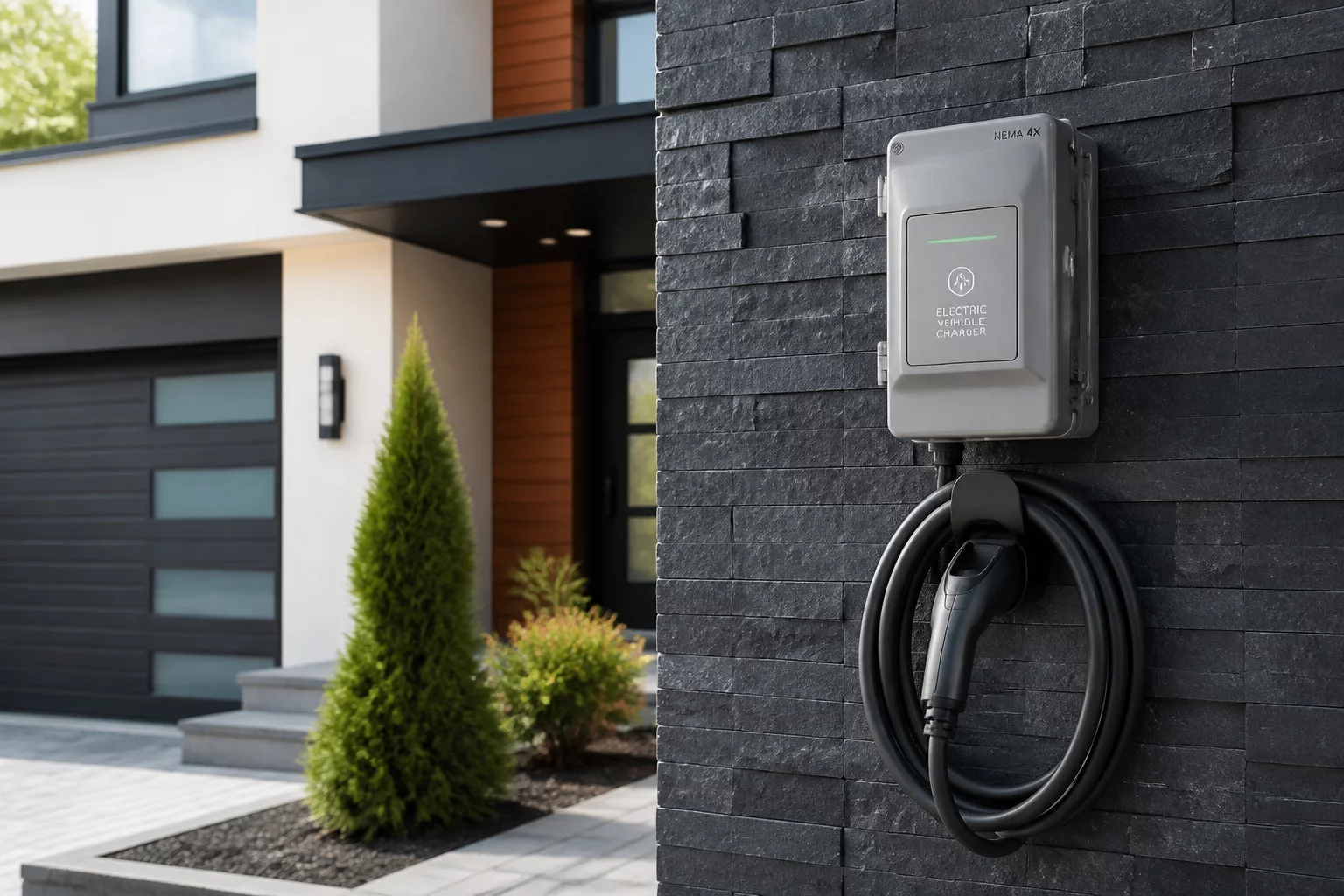
Built for exposed outdoor environments, dual-vehicle carports, and high-frequency charging cycles. Housed in an IP65/IK10 rated chassis with dedicated mounting backplates.
Full compliance with IEC 62196 and SAE J1772 standards, ensuring seamless compatibility across all electric vehicles.
Continuous sensor monitoring adjusts vehicle draw dynamically based on realtime domestic appliance energy consumption.
Automated charge cycles timed with favorable energy rates, lowering operational vehicle recharging expenditure.
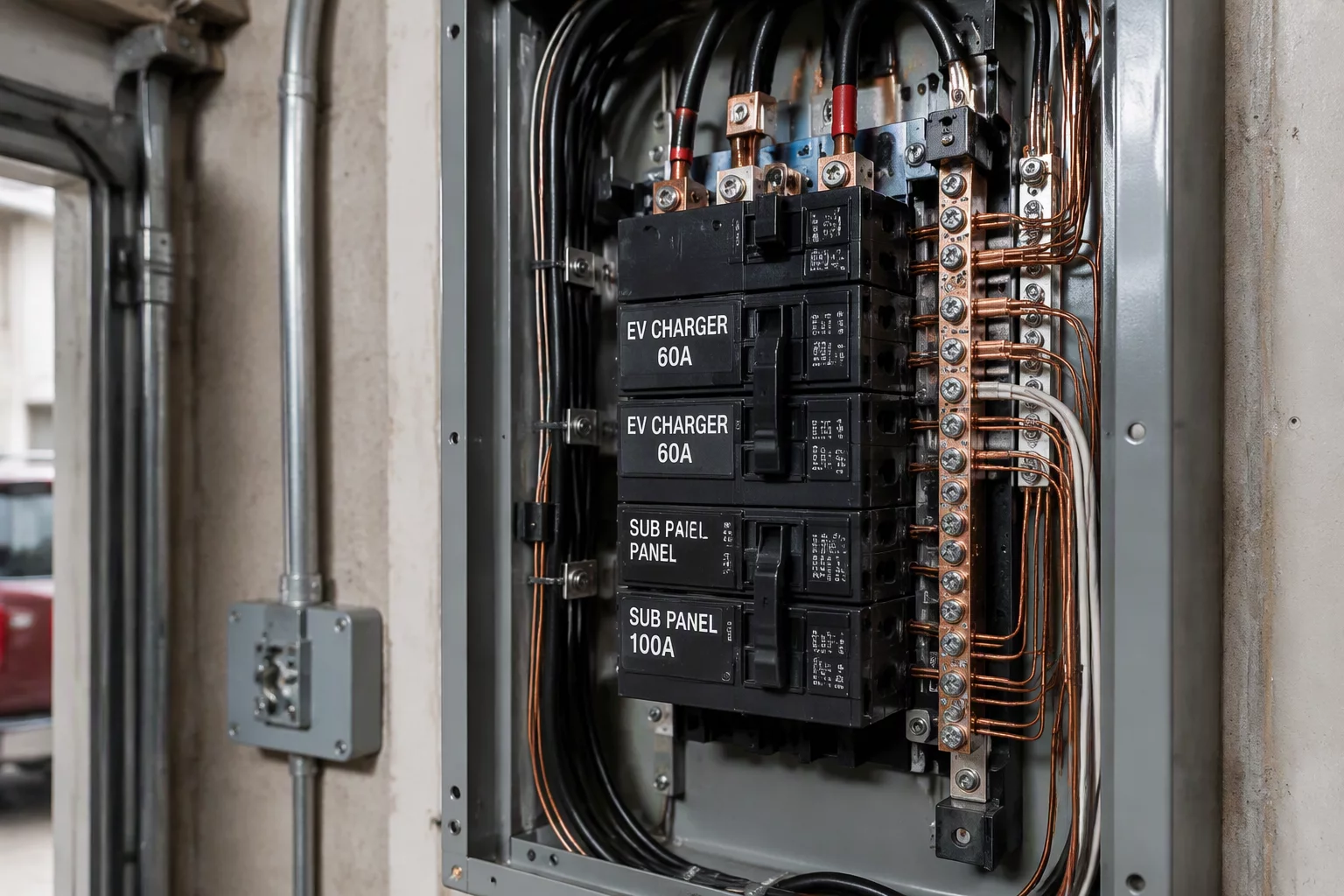
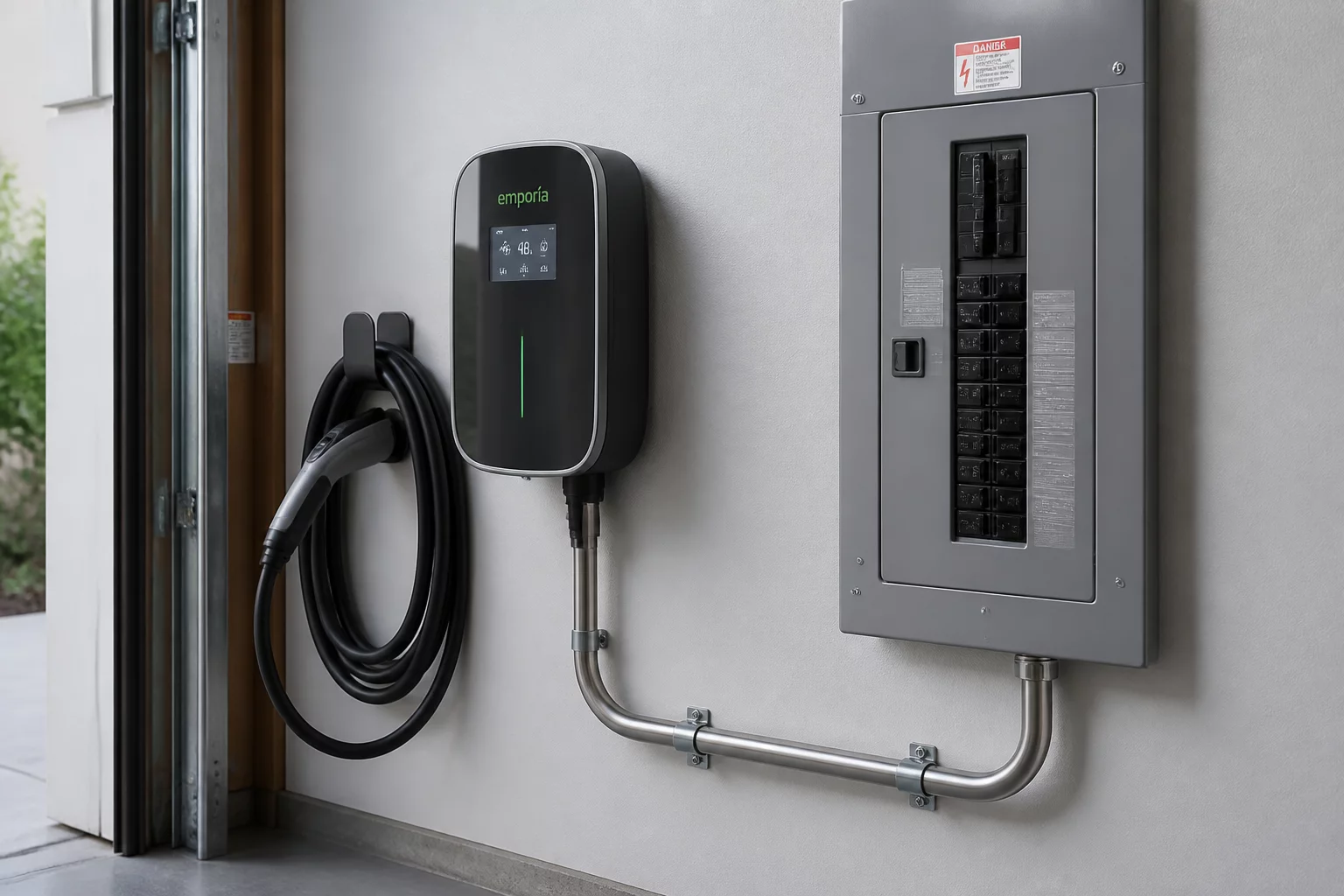
Continuous high-amperage EV charging creates sustained thermal resistance. To prevent panel overheating, voltage drops, and breaker tripping, Timbericsueso installs a discrete, unshared 240V branch line directly from your primary distribution board to the charging station.
Continuous EV loads require the 125% safety rule. For a 48A charging station, a dedicated 60A dual-pole breaker is deployed to prevent false trips and thermal strain during multi-hour charging sessions.
We calculate distance and thermal conditions, selecting high-purity copper THHN or Romex wiring (6 AWG to 4 AWG). This guarantees minimal line resistance, prevents wire overheating, and preserves optimal voltage delivery.
All interior and exterior lines run through rigid EMT metal conduits or UV-resistant liquid-tight flexible tubing, shielding high-voltage wires from mechanical impact, moisture, and ambient heat build-up.
Dynamic load balancing modules continuously monitor real-time household electrical demand, automatically adjusting your EV charging speed to guarantee peak performance without tripping main circuit breakers.
High-precision current transformers (CT clamps) measure the active draw of high-power appliances like HVAC units, induction cooktops, and heat pumps in millisecond intervals.
When primary domestic consumption spikes, the Wallbox dynamically dials down charging amperage from 32A to safe operational margins, ramping back up when household loads subside.
Eliminates the immediate need for expensive electrical utility service upgrades while maintaining 100% compliance with national safety and grid connection codes.
Every property has unique architectural demands. Our certified electrical engineers evaluate your layout to deploy high-efficiency Wallbox charging systems with tailored conduit pathways and complete code compliance.
Indoor
Optimal indoor wall mounting with concealed conduit feeds, clean cable management, and dedicated breakers tailored to residential parking bays.
Open Space
Standalone heavy-duty pedestal posts engineered with precision underground trenching and durable conduit for driveways and open lots.
Utility Wall
Direct panel feed routed seamlessly through shared utility walls to optimize wire run efficiency and preserve clean residential aesthetics.
Weatherproof
Robust external mounting with all-weather NEMA 4X rated protective enclosures, UV-stabilized fittings, and waterproof electrical seals.
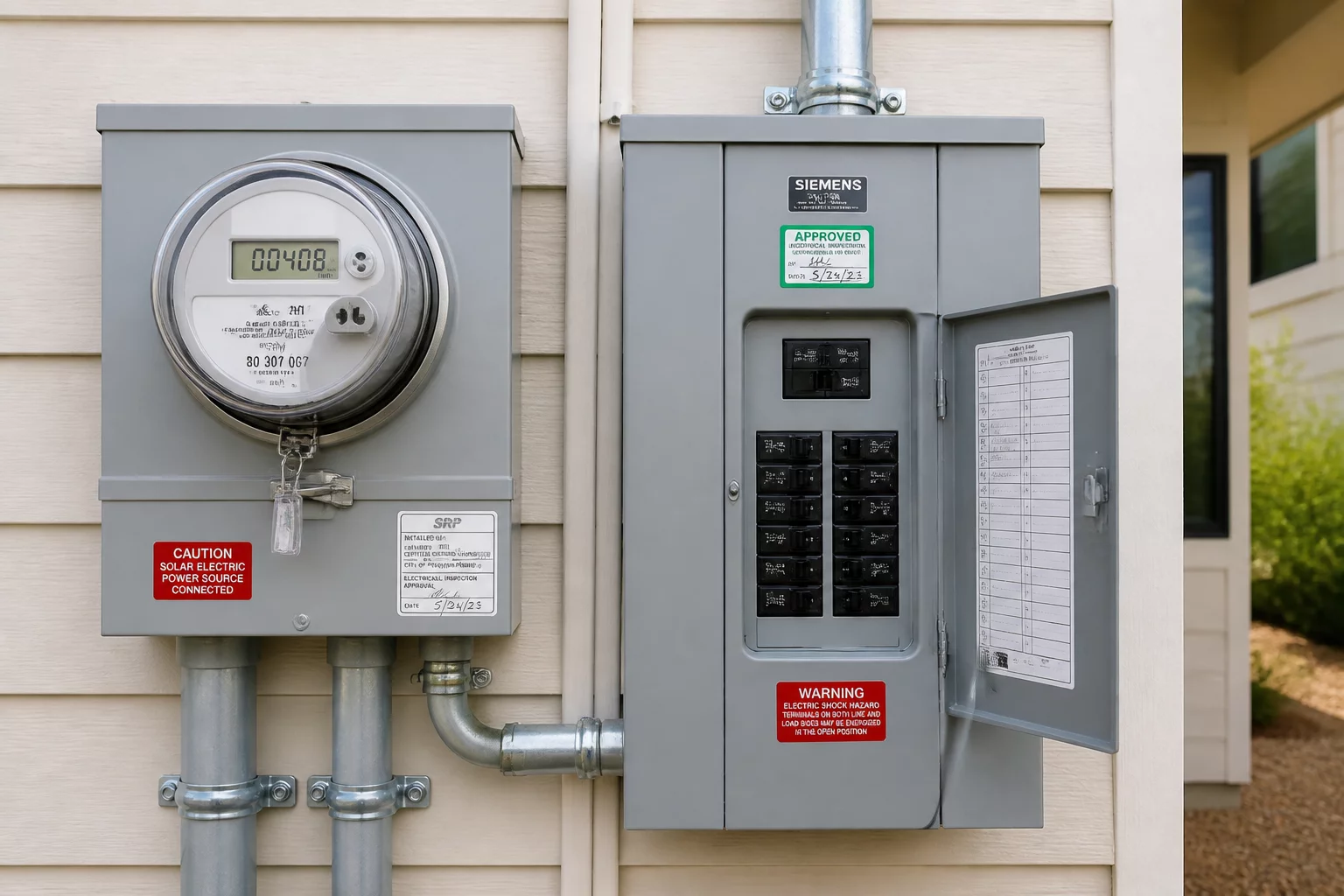
Residential charging installations require verified adherence to local building authority standards and strict NEC electrical safety codes before commissioning.
Local jurisdictions conduct on-site physical evaluations of circuit breaker capacity, line gauges, and grounding.
Filing initial electrical layout drawings and load calculations directly with local municipal building departments.
Strict integration according to NEC Article 625 standards covering EV supply equipment and overcurrent protection.
Scheduling mandatory site audits with certified municipal electrical inspectors upon hardware mounting completion.
Comprehensive insulation, grounding resistance, and voltage drop tests executed prior to utility line activation.
Building codes, turnaround times, and specific filing requirements differ across municipal jurisdictions and utility territories.
Fixed-scope packages based on real installation scenarios across the US. Your final quote is confirmed after a free panel assessment — no hidden fees, ever.
Garage wall-mount, short cable run
Indoor / outdoor + smart setup
Panel upgrade, pedestal, trenching
Prices reflect typical US market ranges and vary with panel condition, run length, and local permit fees. A federal tax credit of up to 30% (max $1,000) may apply under IRS Section 30C.
Every property has distinct electrical and architectural characteristics. Our estimates are driven entirely by technical requirements and safety compliance rather than arbitrary figures.
Six technical variables drive the final price of every installation. During the free on-site audit we measure each one before quoting.
No two quotes are identical — pricing follows engineering reality, not flat-rate guessing.
The physical distance determines the total footage of heavy-gauge copper wiring required. Longer linear runs increase both conductor gauge requirements to counter voltage drop and total installation labor.
Evaluation of the existing electrical panel capacity (e.g., 100A vs 200A). If continuous household demand nears maximum capacity, subpanel additions or main service upgrades may be needed for safe high-power charging.
Indoor garage installations typically follow direct surface routing. Outdoor setups require weatherproof NEMA-rated enclosures, specialized cable gland fittings, and UV-resistant outdoor structural mountings.
Running conductors through finished drywall, concrete walls, or sub-flooring requires precision coring. Detached garages or open driveway installations may demand underground excavation and heavy-duty protective conduit.
Where upgrading the main utility service is impractical, integrating an intelligent energy management module dynamically throttles vehicle charging based on real-time household electrical consumption.
Local municipal building departments mandate electrical permits and mandatory on-site code compliance inspections. Filing costs and documentation protocols vary across jurisdictions.
EV wallboxes operate continuously under sustained high amperage. Precision electrical engineering prevents hazardous thermal accumulation, prevents panel trips, and ensures total operational safety.
Real installations, real inspections passed. A few recent projects from our customers.
"They ran a dedicated 60A line through finished drywall — you can't even tell where they worked. City inspection passed on the first try."
"My 100A panel couldn't handle a charger. Their load management module saved me a $3,000 panel upgrade. Charging works flawlessly."
"Outdoor pedestal install with trenching to a detached garage. The crew handled all permit paperwork end-to-end. Fair price, zero surprises."
Everything you need to know about residential Wallbox installation, load management, electrical capacity, and compliance.
Submit your project specifications to receive a complete calculation for Wallbox supply, electrical panel upgrades, cable routing, and permitting.